

When Complex Sneakers dropped their Best of 2025 list. Reddit immediately roasted it.
Spotify Wrapped hit 200 million users in 24 hours. Five hundred million shares across social media. People couldn’t wait to broadcast their listening habits.
Strava revealed the ASICS Novablast as the most-worn running shoe of 2025, dethroning Nike for the first time ever.
Something fundamental is shifting in how we determine what’s “best.”
And the conversation is getting a lot more interesting because of it.
The Numbers Don’t Lie… But Opinions Do
I spent 20+ years in this industry. Nice Kicks, Sole Collector, Eastbay, Complex Sneakers, Finish Line, StockX, Stadium Goods. That’s just what’s on the official resume. I’ve been part of creating “best of” lists, debating which shoes deserve top spots, arguing with editors and consumers about what culture wants versus what’s actually moving.
Back when Complex Sneakers became its own channel, we debated with everyone in the office who had an opinion on sneakers. And back then, everyone seemed to. To Complex’s credit, I think about 90% of the people working there gave a shit, which is why it was so great. We had influencers like DJ Clark Kent and Ronnie Fieg do their own lists. Then of course we narrowed it down to the sneakers team until we could at least mostly agree on the list we put out.
I was more of a behind-the-scenes guy back then. These lists take a ton of work, and seeing them get shredded on social media afterward can feel thankless. But sometimes that’s exactly what makes you double down... the criticism forces you to defend your position, which means you have to really believe in it.
But those conversations were always based on our observations, not on measurable stats.
Sure, we had some data. We knew what got clicks. We could maybe see what sold through at retail. We knew which shoes hit resale markets. But we never really had data on what people were actually wearing. What shoes stayed in rotation versus what sat in closets after the Instagram photo, or were sold after an influencer did their paid posts about it.
Now we’re starting to know those types of things. And we’re moving toward a place where we can back up opinions with actual data.
StockX’s year-end data, for example, shows us exactly which shoes held value, which ones people actually wanted to buy on the secondary market, and which cultural moments translated to real demand. That’s not editorial opinion. That’s documented behavior at scale.
Spotify Wrapped 2025 saw a 19% increase in engagement over last year. Over 500 million shares in the first 24 hours alone. People aren’t just consuming this data... they’re celebrating it, debating it, using it as social currency.
Strava’s Year in Sport report analyzed billions of activities from 180 million users. Not what influencers were paid to promote. Not what brands wanted to push. What people actually laced up and ran in.
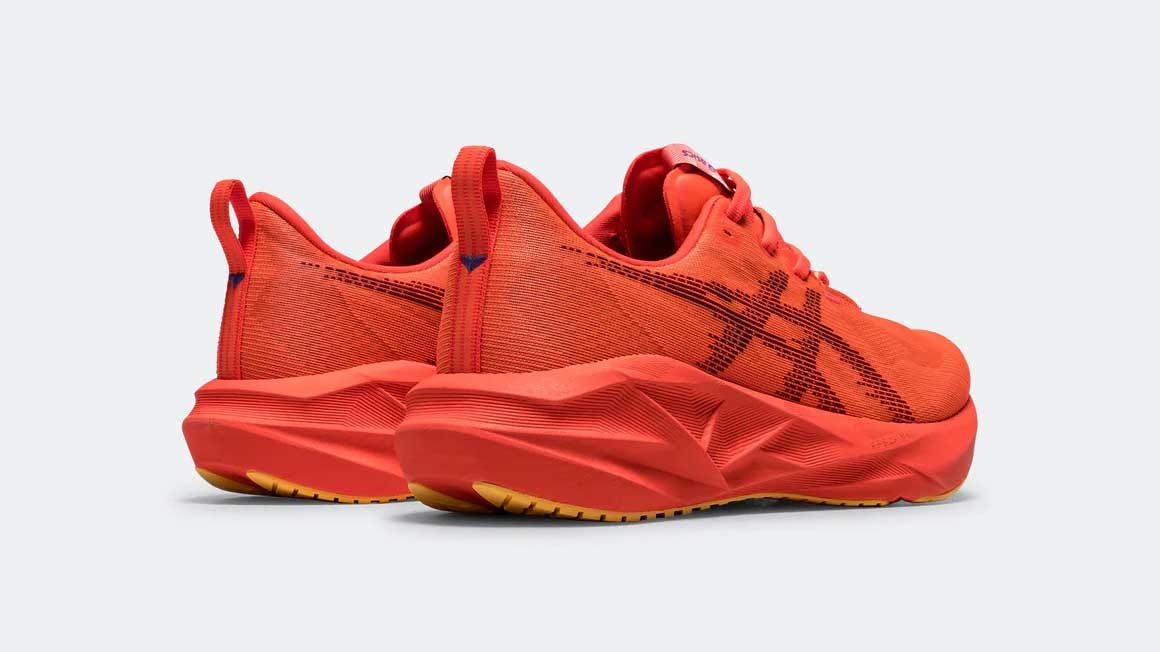
The ASICS Novablast topped the list. Nike Pegasus came in second. HOKA Clifton third.
When’s the last time you saw ASICS Novablast lead a “Best Running Shoes” list from a traditional publication?
Why Traditional Lists Have To Evolve
Let me be clear about something first... these lists are great to stir up conversation. And I respect the hell out of people like Joe La Puma and Matt Welty who do this year in and year out, because we all know how much shit they get for it.
It’s easy to put your favorites out there to a few hundred of your friends and followers. But when your audience is hundreds of thousands waiting to argue with you? That’s different. That takes conviction. That takes being willing to defend your perspective knowing full well that half the internet is going to tell you you’re wrong.
Honestly, those lists are great to me. Fun to read, fun to debate. And because of that, I don’t think they’ll ever go away.
But when I say traditional lists are dying, I’m not saying the people making them are doing bad work. I’m saying the context has fundamentally changed.
Let me show you what I mean.
Complex Sneakers releases their annual Best Sneakers list. Before it even gets to the ComplexCon panel, it’s been talked about for weeks… months even. It’s assembled from opinions of editors, contributors, friends, people who’ve been covering this industry for years. People like me, honestly. We know product, we understand design, we recognize cultural impact.
Reddit tore it apart within hours.
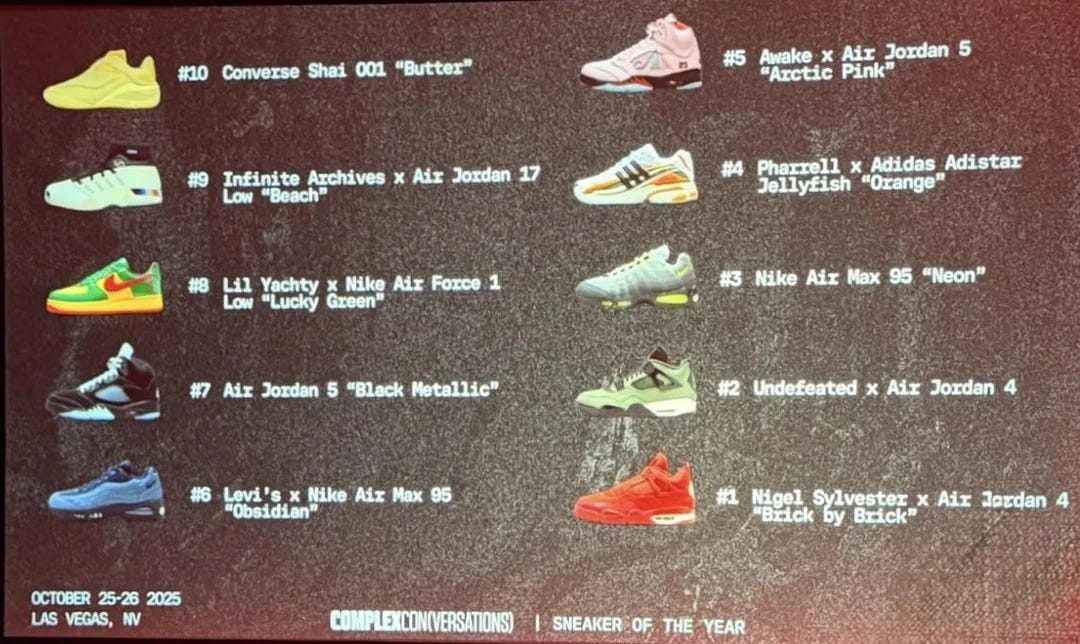
Not because the shoes were bad. Not because the reasoning was flawed. But because people feel like they already know what Matt and Joe are going to pick. They’ve been following these guys for years. They know their tastes, their biases, their favorite collabs.
And that familiarity is exactly why millions of people watch Complex. They tune in BECAUSE of those opinions, not in spite of them. The annual list has become an event people look forward to arguing about.
The Reddit thread wasn’t just criticism. It was the ritual. People comparing their picks against the Complex list. Debating whether John Geiger’s 004 deserved a spot. Arguing about whether the list should prioritize “biggest releases” or “best design.” Sharing screenshots of what they wore most. Posting StockX numbers. Bringing their own evidence.
Matt Welty even wrote an entire piece titled “It’s OK If You Hate Our Sneaker of the Year List” acknowledging this dynamic. The debate IS the content. The disagreement IS the engagement.
This isn’t unique to sneakers. Every year, Spotify Wrapped generates more conversation than any critic’s “Best Albums” list. Your personal data... what you actually listened to... carries more weight than Rolling Stone’s opinion.
And that shift is accelerating.
The Transparency Revolution
Here’s what changed everything… platforms started showing us the receipts.
Spotify Wrapped doesn’t just tell you what was popular. It shows you exactly what you listened to. 27 times you played that song you’re embarrassed about. The artist you discovered in March that became your most-played by July. Your “listening age” that roasted you for having the taste of someone 20 years older.
It’s personal. It’s precise. It’s undeniable.
Strava does the same thing for runners. You log every mile in every shoe. The platform tracks which models accumulate the most distance across millions of users. When they say the ASICS Novablast was the most-worn shoe of 2025, that’s not editorial opinion. That’s aggregated behavior data from people who actually put in the work.
You can’t argue with that the same way you can argue with a magazine’s subjective ranking.
And brands are starting to realize this creates a problem for them.
When the Algorithm Knows More Than the Marketing Department
Nike has spent decades controlling the narrative around what makes a great running shoe. Their marketing budget dwarfs everyone else’s. They sign the biggest athletes. They get the most editorial coverage.
Then Strava’s data shows the ASICS Novablast as the most-worn shoe of 2025, and suddenly all that manufactured narrative hits a wall.
People aren’t wearing what Nike tells them is best. They’re wearing what actually works for their training. And now we have the data to prove it.
This is the part that keeps brand executives up at night.
You can’t spin aggregated usage data. You can’t buy your way to the top of a Strava ranking the way you can buy your way to the top of a website’s “Best Of” list (Spizikes, really?). You can’t influence what 180 million users actually choose to wear on their daily runs.
The metrics are democratized. The truth is visible. The emperor has no clothes... or in this case, no shoes that people actually prefer.
Under Armour spent 13 years and untold millions trying to make Curry Brand happen. The shoes performed well on court. The marketing was aggressive. Stephen Curry is literally the greatest shooter who ever lived.
And yet... if we had Strava-level data for basketball shoes, I’d bet everything that Currys wouldn’t crack the top five for actual court time logged. Because cultural disconnection shows up in usage data in ways it can’t hide in sales reports.
Sales can be manipulated. Deep discounts move inventory. Retailers push certain brands for margin reasons. Parents buy kids shoes they think are appropriate, not necessarily what the kids want.
But when someone chooses which shoes to actually wear every day, day after day, mile after mile... that’s the realest signal we’ve ever had about what actually works.
The Social Proof Multiplier
The other thing traditional “best of” lists never had: virality as validation.
When Complex drops their list, it generates conversation. Maybe some debate. Then it fades.
When Spotify Wrapped drops, 500 million people become unpaid brand ambassadors, sharing their data across every platform they’re on. Instagram stories. TikTok videos. Twitter threads. Discord servers.
Each share is implicit endorsement. “This is what I listened to. This is who I am. Judge me accordingly.”
And because the data is personalized... because it’s their truth, not just editorial opinion... people defend it, discuss it, compare it with friends in real-time.
Strava added a new feature this year called Wrapped Party. You can invite up to nine friends to compare stats live. Who’s the most obsessed fan? Who discovered the most new music? Who’s the early bird versus the night owl?
It transforms passive consumption into active participation. And every participant becomes a node in the distribution network, spreading the data further.
Traditional media can’t compete with that. We write articles, maybe they get shared a few thousand times by the right people. But we’re not creating social experiences. We’re creating content to be consumed.
There’s a fundamental difference.
What This Means for Sneaker Culture
I keep thinking about that Reddit thread roasting the Complex list.
Twenty years ago, that conversation wouldn’t have happened. Or if it did, it would’ve been confined to message boards that most people never saw. The magazine’s opinion was authoritative simply because there was no alternative narrative with comparable reach.
Now everyone has the data. Everyone has the platform. Everyone can make the case for why their favorite shoe deserves recognition, backed by actual metrics.
StockX shows real-time resale values. Instagram engagement metrics are public. YouTube view counts don’t lie. Strava logs every mile. Spotify counts every play.
The democratization of data means the democratization of authority.
And I think that’s fundamentally good for culture, even if it’s uncomfortable for people like me who built careers on being the “expert.”
I was at StockX when we were nine people in a room, watching resale data that contradicted everything traditional sneaker media was saying about what mattered. The shoes getting editorial coverage weren’t the shoes moving on the secondary market. The athletes being crowned as next big signature shoe stars weren’t the ones whose shoes people actually wanted to buy.
The data never lied. But the narrative did.
Now the data is public. And the narrative is being written by millions of people sharing their usage patterns, their preferences, their actual behavior.
When Nike Creates Their Own Wrapped… And They Will
It’s only a matter of time before Nike and other brands create their own version of year-end wraps for their customers.
Someone at Nike has absolutely seen that 500 million shares statistic and thought, “imagine how much revenue that could drive for us.”
Think about it. Nike has the Nike Run Club app with millions of users logging runs. They know exactly which shoes you wear, how many miles you put on them, what pace you run, which routes you prefer. They have more granular data than Strava could ever dream of.
What’s stopping them from creating “Your Year in Running” and making it just as shareable as Spotify Wrapped?
“You ran 847 miles in 2025. Your most-worn shoe was the Pegasus 41 with 412 miles. Your fastest 5K was in the Vaporfly. You discovered trail running in July wearing the Wildhorse.”
Add some colorful graphics, make it Instagram-story friendly, include a personal message from an athlete whose shoe you wore the most, throw in a discount code for your next purchase based on your usage patterns.
The infrastructure is already there. The data already exists. The only question is when, not if.
adidas could do it with their Running app. New Balance could do it with their run club community. On Running could absolutely leverage their connected shoe technology to show you exactly how many miles you logged, what terrain you covered, how your form evolved throughout the year.
And here’s the genius part... it’s not just marketing. It’s useful marketing.
People actually want to know this information about themselves. Spotify Wrapped isn’t popular because Spotify forces it on people. It’s popular because people genuinely enjoy seeing their own data reflected back at them in compelling ways.
A brand that does this well doesn’t just get 500 million shares. They get deeper customer loyalty, better data on product performance in real-world conditions, and an annual touchpoint that keeps them culturally relevant.
The first brand to nail this wins. And when they do, it’ll make editorial “best of” lists feel even more disconnected from how people actually experience sneakers.
The Lists Aren’t Going Away
Let me reiterate something... “best sneakers of the year” lists aren’t new.
I remember NikeTalk forum threads arguing about the best releases. Crooked Tongues had their year-end posts. Sole Collector and Sneaker Freaker both did their versions. These debates have been happening as long as sneaker culture has existed online.
But Complex took it to a completely different level.
They made it THE conversation piece of the sneaker community. The list everyone was waiting for, not necessarily because they agreed with it, but because they knew it would generate the best arguments.
And here’s the thing I’ve come to believe... people actually look forward to hating on the Complex list more than they care about what’s on the list.
It’s become an annual tradition. The list drops, Reddit lights up, Twitter goes wild, everyone has their hot takes about what got snubbed and what didn’t deserve to be there. The debate is the point. The controversy is the content.
That’s actually brilliant if you think about it. Complex created something that generates engagement whether people love it or hate it. The list itself is almost secondary to the conversation it creates.
But now that conversation is happening alongside Strava data showing what people actually wore. Alongside StockX resale data showing what people actually valued. Alongside social media engagement metrics showing what people actually cared about enough to share.
People will always want rankings. We’re hardwired for comparison, for competition, for knowing where we stand relative to others.
So “Best of 2025” lists aren’t disappearing. They’re just multiplying... and changing form.
Complex will still release their editorial picks. Sneaker News will still rank releases. YouTubers will still create tier lists. That’s not going anywhere.
But now those lists exist alongside Strava’s aggregated usage data. Alongside StockX’s year-end resale report showing which shoes actually held value. Alongside Instagram’s most-tagged sneaker analysis. Alongside everyone’s personal Spotify Wrapped equivalent... their own data showing what they actually wore, actually bought, actually cared about.
And increasingly, the crowd-sourced data carries more weight than editorial opinion.
Because you can debate whether a shoe deserves to be on Complex’s Top 10. You can argue about cultural impact versus technical performance versus aesthetic appeal.
But you can’t really argue with the fact that millions of runners chose the ASICS Novablast over everything else Nike threw at them. That’s not opinion. That’s documented behavior at scale.
Pharrell’s Warning About Sound Bites
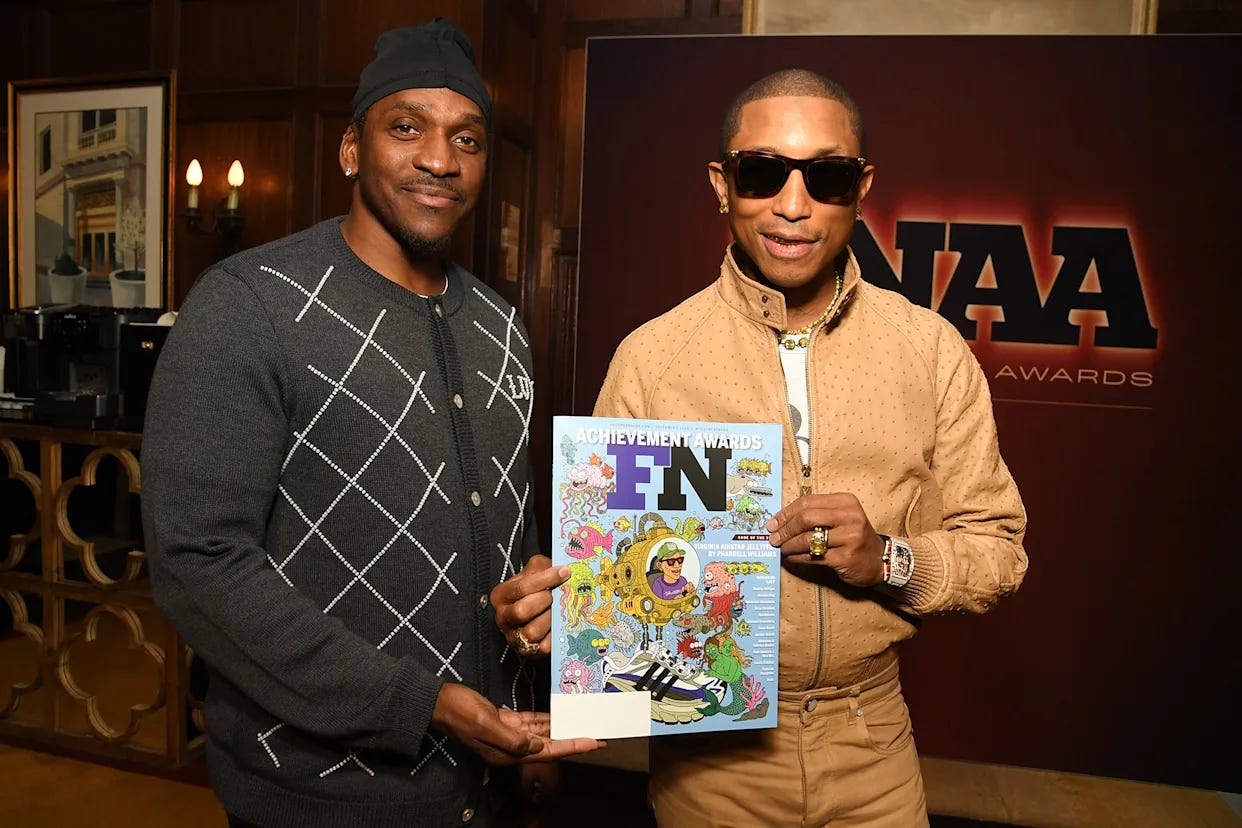
Right in the middle of this data revolution, Pharrell Williams stood on stage at the 2025 Footwear News Achievement Awards and delivered a speech that cuts straight to the heart of what we’re losing.
“Sound bite this. Since most people don’t like to read or do research anymore, sound bite this.”
He was accepting Shoe of the Year for the adidas Virginia Adistar Jellyfish. But he wasn’t there to talk about the shoe. He was there to push back against exactly what I’m describing... the reduction of complex stories into shareable metrics, the flattening of meaning into data points.
