

Fair warning, this is a long read. I don't say that often. But this one covers the intersection of the things I care most deeply about in this industry, and I didn't want to shortchange it. It's important. Bigger than me or you. Grab a coffee. When you’re done, if you feel it, share it with someone who needs to read it.
On April 10, 2026, Nike announced that Tony Bignell, its Chief Innovation Officer, was leaving the company to “explore other creative and philanthropic opportunities.” Andy Caine, the VP and creative director for Nike’s sportswear division, would succeed him effective April 12.
That’s a Friday announcement with a Sunday start date. In corporate communications, that’s the equivalent of burying the news in the weekend recycling.
Bignell spent 30 years at Nike. He was only elevated to the CIO role last June. Less than a year into the job, he’s gone. And as the turnaround story gets more complicated by the quarter, this is now the fourth leadership change in Nike’s innovation division in three years. Four. In three years. In the single most important division for a company whose entire identity is built on the word “innovation.”
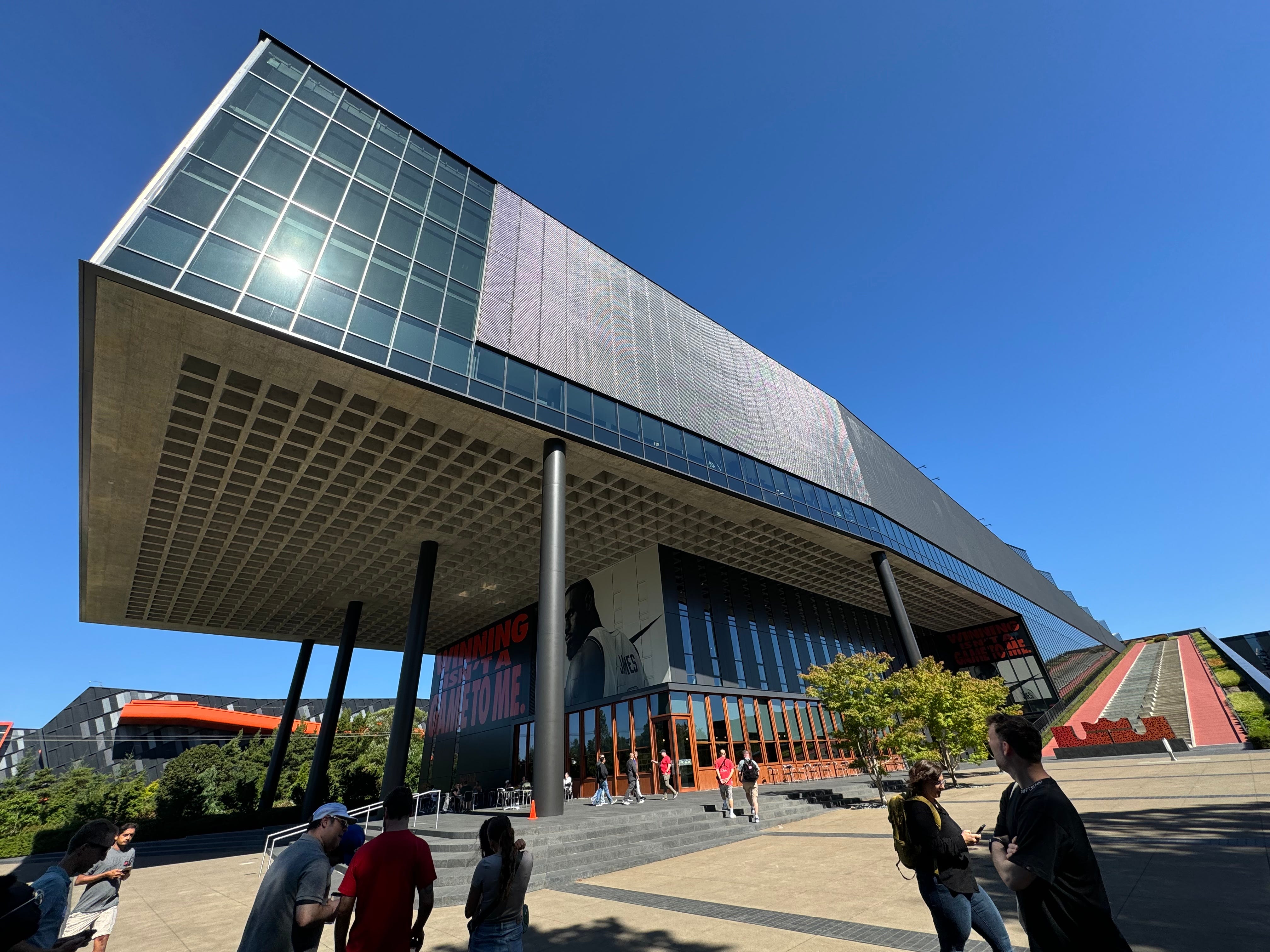
I’ve been in this industry a long time. I’ve watched Nike up close at Sole Collector, at Complex, at Finish Line, at StockX. And I’ve seen this before... not just at Nike, but by Nike. The company has a long, complicated, and actually instructive history of not knowing who it is in a particular space, flailing publicly, and then eventually figuring it out in a way that changes the whole game.
Skateboarding is the most famous example. But it’s far from the only one.
Nike Has Been Here Before. More Than Once.
Let’s start with global football, because the parallel to today is almost uncomfortably direct. Nike launched its first football boot in 1971... literally called “The Nike”... the first shoe to ever carry the Swoosh. It cost $16.95, didn’t hold up well in cold and wet weather, and soon fell by the wayside. Nike’s own description of it is almost poetic in its honesty… “But it was a start.”
For the better part of two decades after that, they were an afterthought in the sport. adidas owned football the way Jordan Brand owns basketball... completely, culturally, without serious competition. Nike was seen as American, as a running and basketball brand, as fundamentally not understanding the sport or its people.
Sound familiar?
The shift didn’t happen through a marketing campaign or a restructuring announcement. It happened through patience and the right relationships. Nike spent years in the early 1990s signing charismatic players like Romário, Eric Cantona, and Edgar Davids, building from the inside of the culture out rather than trying to buy legitimacy from the top down. By 1994 they were at the World Cup on U.S. soil. By 1997 they had a boot factory in Montebelluna, Italy, the ancient cobbling capital. By the time Ronaldo and Ronaldinho were at their peaks, Nike was the most culturally powerful brand in global football. They didn’t just catch adidas. They changed the conversation entirely.
Then there’s the story most people forget, because it predates most sneaker culture as we know it. In the mid-1980s, Nike nearly collapsed. Running, the category the entire company was built on, had gone soft. Nike had over-produced, margins were compressed, and a scrappy brand called Reebok was eating them alive in the aerobics boom that Nike completely missed. Phil Knight himself later admitted the company had lost its way. They laid off employees. They questioned the business model. For a moment, it was genuinely unclear whether Nike was going to be the company we know today or a cautionary footnote.
What saved them wasn’t a new CEO or a restructuring. It was Michael Jordan, a waffle iron, and a renewed obsession with what Nike had always been at its best... a brand that served athletes first and figured out the culture second. The Air Jordan line launched in 1985 and changed everything, not because of the shoe alone, but because it reconnected Nike to its foundational purpose. By 1988 they had “Just Do It.” By 1990 they were building their Beaverton campus.
And then there’s skateboarding.
Three Attempts, Two Disasters, One Revolution
Nike’s first real attempt to crack skateboarding came in 1996. They launched Nike Skateboarding with three signature silhouettes aimed at the “extreme sports” category that was blowing up at the time. The shoes were called the Choad, the Snak, and the Schimp. I’m not making those names up.
The skate community didn’t just reject them. They mocked them openly. One memorable review said they looked like your mom’s Skechers. The products were, by most accounts, knockoff versions of what DC and éS were already doing, and skaters sniffed out Nike’s intentions immediately. To them, Nike was the establishment... the corporate machine that wanted to profit from their culture without actually understanding it, caring about it, or being willing to invest in it on its own terms. Consolidated Skateboards launched an entire anti-Nike campaign with the slogan “Don’t Do It.” The skate shops refused to carry the product.
First attempt: dead on arrival.
And I say that as someone who was one of the skaters rejecting them. I hated the idea of Nike moving into local skate shops and commercializing a culture that felt like ours. The Choad and Bam Margera era was everything we feared about a corporate giant trying to buy its way in... the wrong product, the wrong face, the wrong energy entirely.
But by the time Bodecker put together the actual team, something shifted. These weren’t hiredguns or crossover celebrities. They were people the community genuinely cared about. Danny Supa. Gino Iannucci. Richard Mulder. Reese Forbes. I still have a pair of Gino’s first Dunk. Still chasing the Chocolates. And once they signed Brian Anderson, one of my all-time favorite skaters, I had all but forgotten my feelings about what came before. That’s how you earn a culture. Not by buying it. By showing up for the people who already belong to it.
Rather than walk away after the first failure, Nike had tried again around 2000 with a brand called Savier. The play here was smarter on paper... if the Swoosh itself is the problem, hide it. Savier was technically an independent Portland-based skate brand, backed by Nike money and using Nike’s technology infrastructure, but without the logo that had poisoned the well. The team was legitimate. The product was better. But the brand expanded too fast, went too broad, and was dissolved in a mutual agreement with Nike by 2004.
Second attempt: better, but still not it.
What happened next is one of my favorite stories in sneaker history, and it’s directly relevant to what Nike is going through right now.
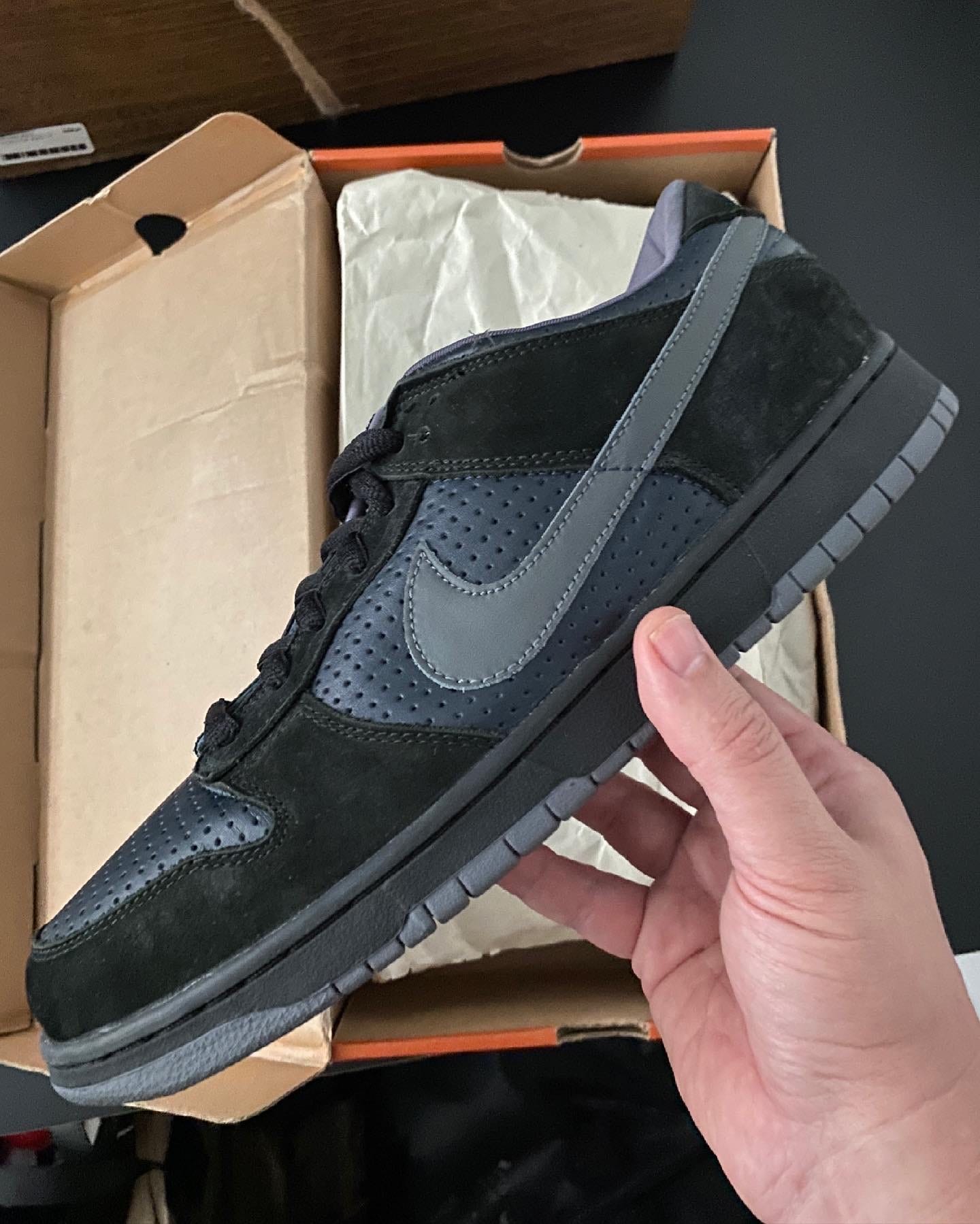
In 2001, Nike put a man named Sandy Bodecker on the problem. Bodecker had previously been the person who figured out how to make Nike work in European football... another market where Nike had been perceived as a corporate outsider with no cultural credibility. He understood something that Nike’s leadership kept getting wrong: you cannot bludgeon your way into a subculture. You have to earn it.
Bodecker’s approach was methodical and, more importantly, humble. He started by listening (if you’ve ever worked with me you already know exactly why I love this story). He understood that skaters didn’t hate Nike because of the Swoosh per se... they hated what the Swoosh represented in that context. Too corporate. Too calculated. Too obviously just trying to grab market share. So he built Nike SB from the inside of the culture out, starting with those four skater’s skaters. The product itself was a reimagined Dunk, a basketball shoe that already had cult status among skaters for its ankle support and cushion. Bodecker didn’t try to invent a new skate shoe from scratch. He took something Nike already knew how to make, listened to what skaters actually needed from it, and made it better for them specifically: fatter tongue, Zoom Air insoles, better grip, reinforced stitching. Then came the limited collaborations. Supreme. Zoo York. Chocolate. The infamous Pigeon Dunk, which caused an actual riot outside a New York City store in 2005, with kids holding onto gates while police called in SWAT. That’s not a marketing campaign. That’s a cultural movement.
Nike SB didn’t just succeed. It fundamentally reshaped sneaker culture, helped birth the modern limited-release model, and became the template for how a massive brand enters a subcultural space with credibility. And it happened because Nike was willing to be wrong twice, hire the right person with the right philosophy on the third try, and then actually let that person do the work.
The lesson in all three of these stories isn’t “try harder.” It’s “understand first.”
The historical pattern is clear. What's less clear is whether Nike has the runway to repeat it. Here's what I think the Caine appointment actually signals, and why the Innovation Kitchen story changes how I read all of it.