

Sorry this is a day late. We lost power for three days... which honestly turned into the best Christmas I've had in years. Sometimes the best moments happen when everything we think we need gets stripped away. I hope you and yours are enjoying the holiday season and are surrounded by love during this time.
Last week, I showed you how Nike’s $5 billion nostalgia machine broke down. Jordan retros that commanded $400-500 in resale now sit at $220. Legendary colorways available for weeks after release. An entire generation trained to wait because they know the shoe will come back.
The economics of nostalgia are collapsing. So what comes next?
After nearly 20 years building for Sole Collector, Complex, StockX, and countless others, I’ve watched brands succeed and fail at making the transition from mining the past to building the future. Some figured it out. Most didn’t.
Here are the seven strategies that will define who wins and who disappears in the next decade.
1. Actual Innovation (Not Marketing Innovation)
Nike used to innovate. Not just in marketing... in actual product development.
Air Max technology in 1987 was revolutionary. It literally changed how running shoes were made. Flyknit in 2012 was real innovation... a new manufacturing process that created lighter, better-fitting shoes.
But somewhere along the way, Nike started confusing collaboration with innovation. They’d slap a Travis Scott logo on a Jordan 1 and call it innovative. They’d change the color of a Dunk and act like they’d invented something new.
Don’t get me wrong, classic designs are the greatest palette for color experimentation.
But to me, that’s not innovation. That’s more like colorway management.
Hate it or love it… real innovation looks like what On Running did with CloudTec cushioning. Or what Hoka did with maximalist geometry. Or what Allbirds did with wool uppers. These are actual attempts to make shoes differently, not just make them look different.
Innovation done right, creates its own nostalgia timeline. In 20 years, people will want retros of the first On Cloudmonster because it represented a genuine shift in running shoe design. They won’t want retros of the 47th Jordan 1 colorway because it represented nothing except Nike’s quarterly earnings goals.
If Nike wants to survive the next 20 years, they need to get back to making things that matter, not just things that sell. It might even need to be more than the mind-altering designs they’re working on because, well, even if it’s true, it sounds like marketing speak we’ve heard before from Nike.
The brands already doing this understand something fundamental: innovation isn’t about being first, it’s about being meaningful. New Balance didn’t invent the dad shoe, but they perfected the 990 series through continuous iteration. ASICS didn’t create gel cushioning for fashion, they created it for performance and let culture catch up.
That’s the blueprint. Make something genuinely better. Then let the market decide if it’s worthy of nostalgia 20 years from now. Don’t force retros on us until we genuinely miss the shoes or the athlete.
2. Sustainability as Core Philosophy, Not Marketing Tactic
Gen Z cares about sustainability. But this goes deeper than just appealing to one generation.
The sneaker industry produces roughly 700 million pairs of shoes annually that end up in landfills. The materials are often non-recyclable. The manufacturing is resource-intensive. The whole system is designed for disposability.
That model is not sustainable... literally or figuratively.
Brands that figure out how to make great shoes that are also environmentally responsible will own the next decade. Not because it’s good marketing... because it’s the only way forward.
Allbirds tried to lead here but struggled with scale and retail distribution. Veja has done better in the European market. But we haven’t seen a major brand truly commit to sustainability as a core business model rather than a side project.
Nike’s “Move to Zero” initiative sounds good in press releases. But how many reading this have seen any meaningful shift in the actual products? Same materials, same construction, same end-of-life disposal problems. Nike's sustainability team got gutted while their transparency decreased. Meanwhile, adidas is moving in the opposite direction.
The brand that cracks this... that makes genuinely sustainable shoes that perform as well as traditional models... that brand will print money for the next 30 years.
Here’s what that actually looks like in practice: transparent supply chains, materials that can be recycled or composted, manufacturing processes that minimize water and energy use, and business models that incentivize longevity over disposability.
Patagonia figured this out in apparel decades ago. Their “Worn Wear” program encourages customers to repair and resell used gear instead of buying new. They actively discourage overconsumption while building fierce brand loyalty.
The sneaker brand that adopts that philosophy authentically... not as a marketing campaign but as an actual operating principle... will build a customer base that stays loyal for life.
3. Community Over Hype
StockX and the entire resale market taught brands the wrong lesson. They looked at shoes reselling for 5x retail and thought, “We should make limited shoes.”
But that’s backwards. The resale market exists because brands created artificial scarcity. If Nike made enough Travis Scott Jordans to meet demand, there’d be no resale market for them.
The smarter play is building actual community around products instead of manufactured scarcity.
Look at what Tracksmith does in running. They’re not the cheapest brand. They’re not the most innovative. But they’ve built a legitimate community of runners who love the brand, buy the products, and advocate for them organically.
They do this through clubs, events, content, and actually giving a shit about the running community beyond selling them shoes.
Nike used to do this. The original Nike Running Clubs in the ‘80s and ‘90s were genuine community builders. Even their community store experiments over the last decade or so, show that they know community matters more than anything. Somehow, they got more corporate, and started treating community as a marketing tactic rather than an actual relationship.
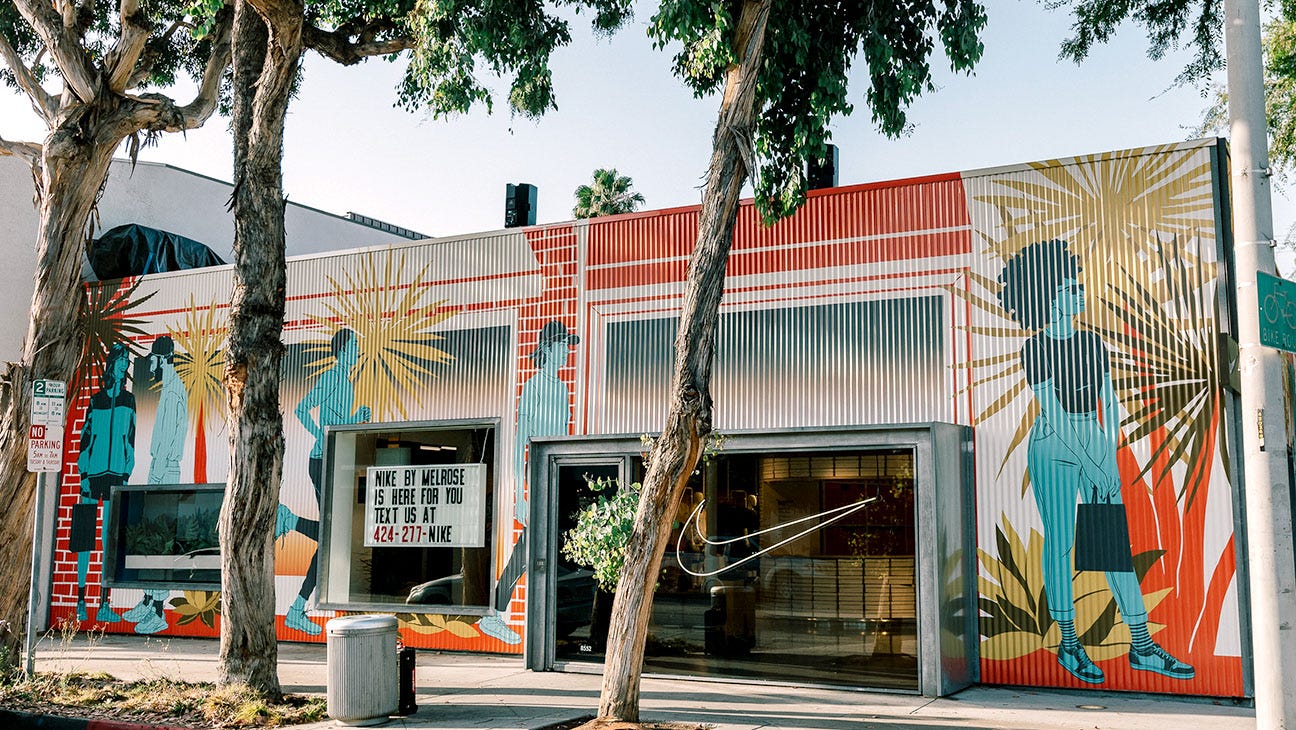
The future belongs to brands that build real relationships with customers, not transactional ones.
What does this look like in practice? Local running clubs that aren’t just branded marketing events. Actual investment in grassroots sports. Product development that involves community feedback loops. Customer service that treats people like humans, not ticket numbers.
When I was at Finish Line, we experimented with in-store events that brought local run clubs and sneaker communities together. The ROI wasn’t always immediately measurable in sales, but the loyalty it built was undeniable. People came back because they felt connected to something bigger than just buying shoes.
That’s what community actually means. And the brands that understand this will win the long game even if they lose some quarterly earnings comparisons in the short term.
