

I’ve been staring at these Nike Air Raid “Tuskegee Airmen” for the past week, and I keep coming back to something that feels increasingly urgent... the role sneakers play in preserving stories that some would rather erase.
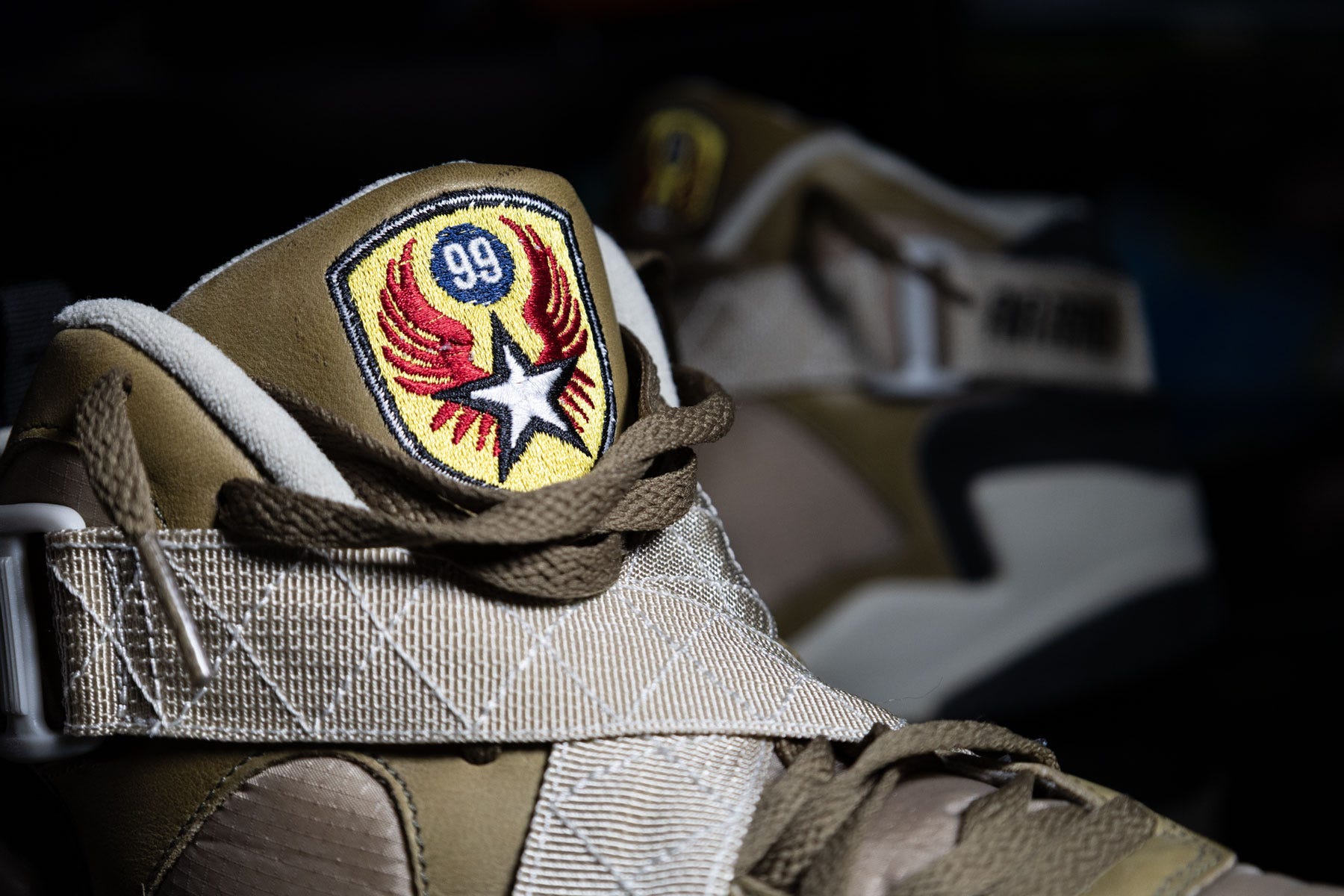
In 2004, Nike released a Tuskegee Airmen pack that included this Air Raid along with an Air Force 1 Mid and a Shox VC 3. These weren’t just shoes with a military colorway slapped on them. The khaki and black leather, the tan nylon straps with “AIR RAID” branding, the fighter jacket-like nylon toebox, the 99th Fighter Squadron patch on the tongue... every detail was intentional. This was years before Nike’s Black History Month releases became an annual tradition, before it became standard practice for brands to honor African American history every February. This was Nike saying these stories matter, and we’re going to make sure people remember.
That decision feels more important now than it did 20+ years ago.
The Men Behind the Shoes
The Tuskegee Airmen were members of the 332nd Fighter Group and 477th Bombardment Group, the first African American military pilots in the United States Armed Forces. Between 1941 and 1946, approximately 992 pilots graduated from Tuskegee Army Air Field in Alabama, receiving their commissions and pilot wings despite facing discrimination at every turn, both within the military and in civilian life.
Think about that for a second. These men were training to defend a country that wouldn’t let them use the same water fountains as white Americans. They were preparing to fight for freedom abroad while being denied basic dignity at home. And they did it anyway.
The 332nd Fighter Group, known as the “Red Tails” because of the distinctive red markings on their P-47 Thunderbolts and later their P-51 Mustangs, flew more than 15,000 sorties during World War II. They escorted American bombers deep into enemy territory, and bomber crews specifically requested them because of their reputation for staying with their charges instead of chasing personal glory. The Red Tails flew 1,578 combat missions, and it’s estimated that they destroyed 150 enemy aircraft on the ground and 112 in the air.
These weren’t just good pilots. They were exceptional. They had to be, because the Army Air Forces designed the entire Tuskegee program as an experiment to prove Black Americans couldn’t handle the demands of military aviation. The Tuskegee Airmen didn’t just pass that test, they shattered every expectation and paved the way for the integration of the U.S. Armed Forces in 1948 with Executive Order 9981.
Eighty-four of these men gave their lives. Sixty-eight were killed in action or accidents, 12 died in training, and 32 became prisoners of war. Their sacrifice deserves to be remembered, not erased.

Why This Matters Right Now
