

If you hate sneaker resellers, you should probably hate Nike for creating them.
I know that’s going to piss some people off. But if you can get past your instinct to dismiss it, I can explain…
Viral videos show resellers dramatically asking, “how did sneakers die?” while other creators celebrate their demise with barely concealed glee. Comment sections overflow with schadenfreude... people who’ve hated resellers for years finally getting their “I told you so” moment. One of Los Angeles’ most well-known consignment operations is facing serious legal issues. Shops are closing. Resellers are taking massive losses.
What gets lost in all the dunking on resellers and consignment shops is that this isn’t about sneakers dying. It’s about a market correction that’s been decades in the making. It’s about an industry being cleansed of people who never actually cared about sneakers in the first place. And I don’t mean everyone has to pass some arbitrary sneakerhead test. It’s much more human than that.
But the uncomfortable truth that nobody wants to talk about? Nike created this mess.
The Doors Nike Closed
Let me take you back to 2018-2020, when the sneaker industry fundamentally changed.
Actually, let’s go back even further. Nike’s shift away from wholesale started before John Donahoe took over as CEO. In 2019, Nike cut ties with Amazon. That same year, boutiques like Premier in San Mateo lost their accounts and subsequently went out of business. The “Consumer Direct Offense” strategy was already underway under Mark Parker’s leadership.
But when Donahoe arrived in January 2020, he didn’t pump the brakes. He accelerated. Hard.
By August 2020, Nike was shutting down wholesale accounts: City Blue, VIM, EbLens, Belk, Dillard’s, Fred Meyer, Bob’s Stores, Boscov’s, and Zappos. The company called it “Consumer Direct Acceleration.” They weren’t just reducing wholesale... they were systematically eliminating it, focusing on Nike Digital and their owned stores, plus what they called “a smaller number of strategic partners.”
If you wanted to open a sneaker store during this period, you had essentially zero chance of landing a Nike wholesale account. The brand didn’t want new doors. They wanted control.
Think about what that meant for someone who genuinely loved sneakers and wanted to build a business around them. The traditional path... open a shop, get accounts with Nike and other brands, build a local community... that path was closed. Nike wasn’t taking new applications. They were actively reducing the number of stores carrying their product.
So what were your options?
You could try to build around adidas, New Balance, and smaller brands... but let’s be honest, Nike dominates basketball culture. If you wanted to sell the shoes people actually cared about, the shoes driving culture, you needed access to Nike product.
The only realistic path left was consignment and resale.
This wasn’t some scheme to flip shoes for profit. For many people, it was the only way to open a sneaker store. You wanted to be in the sneaker business? You bought from resale markets, you took consignment, you worked StockX and GOAT and eBay. Not because you were trying to gouge customers, but because Nike had locked the front door.
Now those same shops are closing, and everyone’s pointing fingers.
Resellers are greedy. Consignment shops killed the culture. Bots ruined everything. NFTs and crypto bros drove the bubble.
All of that’s partially true. But it’s also incomplete.
Yes, there were bad actors. Ann Hebert’s son Joe, running West Coast Streetwear, using bots for online drops and leveraging connections to buy inventory at Nike’s employee store for 40-50% off retail, then flipping it for massive profit. When Bloomberg exposed the connection between the 19-year-old reseller doing $200,000 in monthly revenue and his mother, a 25-year Nike VP overseeing North America, she resigned within a week (and recently joined… Foot Locker?). The Instagram resellers posting corny photos with wads of cash and unnecessary stacks of inventory, performing wealth for engagement. The people who treated sneakers like pork belly futures, caring only about arbitrage opportunities.
Those people deserve the criticism they’re getting.
But lumping every consignment shop and resale operation into that category? That’s lazy thinking.
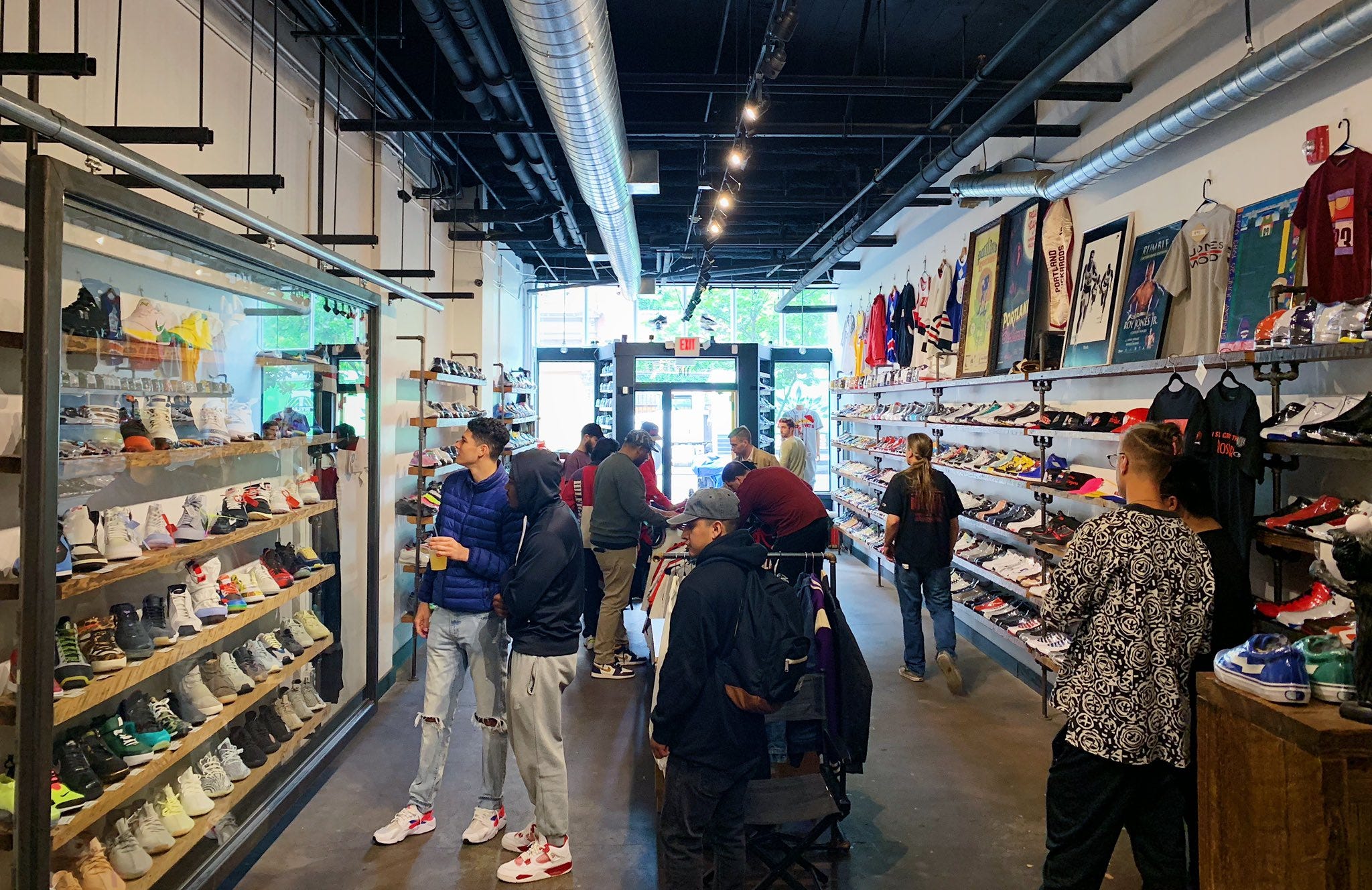
I know people who opened consignment stores because they loved sneakers. They wanted to build community spaces, especially in smaller markets, where people could buy, sell, trade, and connect over shared passion. They wanted to create what sneaker stores used to be before Nike decided every transaction should flow through Beaverton.
Those people didn’t kill sneaker culture. They tried to preserve it through the only channel Nike left open.
When we were building StockX... and I was employee #9, so I watched this firsthand... we built a platform that let the market decide prices. Buyers and sellers connected through us. We verified authenticity, facilitated transactions, but we didn’t set prices. Supply and demand did.
StockX got criticized constantly. “You’re enabling resellers.” “You’re making it impossible for real fans to get shoes.” “You’re destroying sneaker culture.”
But you know what platform operates the exact same way? eBay.
And eBay is celebrated as this democratic marketplace, this platform that lets anyone sell anything. Same model, same market dynamics, same buyer-seller connection... but completely different perception.
The difference? eBay sells everything. StockX focused on sneakers and streetwear. When you specialize in something people are passionate about, they blame you for the market realities they don’t like.
We didn’t create resale culture. We made it more transparent and safer. Before StockX, you were buying from random people on Facebook groups and Twitter, hoping you didn’t get scammed. We brought structure, authentication, market data. We made the game visible.
People hated that. Not because we were doing something wrong, but because seeing the real market value of hyped releases made them uncomfortable. At times, it made me uneasy, too.
I need to address something I’ve been saying in other pieces, and it applies here too.
Leadership is hard. Leading a company like Nike... with millions of passionate fans, decades of history, market expectations, board pressures... that’s harder than most people can imagine.
John Donahoe wasn’t some villain who intentionally destroyed Nike. He came from eBay and ServiceNow with specific expertise in digital commerce and technology. He was an athlete. By all measures, the board hired him for that expertise, for the right reasons, believing Nike needed to accelerate its digital transformation.
The board made that choice. The board set those priorities. Donahoe executed the strategy he was hired to execute.
Did he make mistakes? Absolutely. The wholesale cuts went too deep. The focus on efficiency over product innovation damaged Nike’s brand. The elimination of sport-specific teams gutted institutional knowledge. The decision to cut off retailers created a vacuum that resale filled.
But let’s be honest about who carries responsibility here. A CEO doesn’t operate in isolation, especially in a publicly traded company. The Board of Directors approved these strategies. Shareholders demanded growth and margins. Analysts rewarded cost-cutting and digital metrics.
Donahoe became the fall guy because that’s how corporate America works. When things go wrong, the CEO takes the blame. The board that hired him, set the strategy, and approved every major decision? They’re still there, now bringing back Elliott Hill to clean up the mess they helped create.
This isn’t about defending Donahoe. It’s about understanding that Nike’s problems run deeper than one CEO. The resale market explosion, the consignment shop boom, the disconnect with sneaker culture... these weren’t caused by one person. They were systemic failures by an organization that forgot what made it special in the first place.
So if Nike created the conditions for resale to explode, and if many consignment shops were opened by people who genuinely love sneakers, why is everything collapsing now?
Because the market was unsustainable.
Not because resale is inherently wrong, but because too many people entered the market for the wrong reasons. They saw StockX sales numbers. They saw Travis Scott Jordans selling for $2,000. They saw crypto millionaires buying shoes as investments. They thought it would last forever.
It couldn’t.
Nike created the resale market through artificial scarcity and wholesale cuts. Then adidas and Kanye West saw what was happening and exploited it with Yeezy... taking the limited release model to an extreme that made resale premiums part of the business strategy itself. Other brands watched and copied. Everyone wanted their own hype machine.
Sneaker values are driven by scarcity and cultural relevance. When Nike made everything limited to drive hype, they created artificial scarcity. When they focused on digital drops and bots dominated, they made authentic scarcity even worse. When they pushed direct-to-consumer, they concentrated supply in ways that made flipping more profitable.
But markets correct. Always.
Nike started making more of hyped releases. They cracked down on bots. They changed release strategies. Most importantly, consumers got tired of paying $500 for shoes with a $170 retail price.
The resale premium that made the business work started shrinking. Consignment shops that had built their models on 30-40% margins suddenly faced 10-15% margins... or losses. Inventory that used to move in days sat for months. Capital got tied up in shoes that wouldn’t sell at the prices needed to stay profitable.
The shops closing now? Many of them aren’t failing because they did anything wrong. They’re failing because the underlying economics changed. The game they entered no longer exists.
I’m not going to name specific shops or speculate about ongoing legal issues, that’s not my place. But I’ll say this... when a shop becomes famous for massive inventory, celebrity clientele, and social media presence, they’re playing a different game than a neighborhood consignment store.
They became a brand, which means they needed to maintain an image, spend on marketing, carry significant inventory, hire staff, and pay rent in Los Angeles. Those are legitimate business expenses. But they’re also fixed costs that require consistent revenue.
When the market softens, big operations get hit hardest. A small shop can reduce hours, cut back inventory, ride out the storm. A business with seven-figure overhead? That’s a different calculation.
This isn’t about judging their business model. It’s about understanding that scale works both ways. Growth in a boom creates vulnerability in a bust.
The Viral Video Industrial Complex
Now we’ve got a whole category of content creators making videos about “the death of sneakers” and “reseller fails.” Comment sections full of people celebrating shops closing, resellers taking losses, the whole industry struggling.
I get it. There’s satisfaction in watching people who seemed to be gaming the system face consequences. The resellers who flaunted wealth, who bought everything just to flip it, who treated sneaker culture like a commodity... yeah, schadenfreude feels good.
But let’s be clear about something.
Those viral videos aren’t journalism. They’re not analysis. They’re engagement farming. Content creators know that “resellers failing” gets clicks, gets shares, gets comments. They’re incentivized to make the situation seem as dramatic as possible.
“Sneakers are dead” is a better headline than “Sneaker resale market experiencing predictable correction after unprecedented boom driven by pandemic-era stimulus, cryptocurrency wealth, and brand strategy mistakes.”
One gets views. The other is accurate.
The sneaker industry isn’t dying. Certain business models built on unsustainable market conditions are dying. That’s very different.
You know who’s still here? Who’ll still be here when the trend-chasers are gone?
The people who actually care.
Local shops that built community rather than just moved inventory. Collectors who bought shoes because they loved them, not because they saw dollar signs. Resellers who treated it as a sustainable business rather than a get-rich-quick scheme. Brands that focused on product and culture rather than artificial hype.
StockX is still here. GOAT is still here. eBay’s sneaker business is still here. Foot Locker survived Nike’s wholesale cuts and is rebuilding. Boutiques that carried diverse brands rather than just chasing Nike heat? They’re fine.
The correction is cleaning out people who were here for the wrong reasons.
That’s not a tragedy. That’s how markets are supposed to work.
I also need to address something directly because I know what some people think.
“Nick, you were at StockX. You enabled all this. You helped create the problem.”
Let me be clear. I’m not a fan of price gouging. I hate seeing shoes I want hit the market at 300% retail. I hate watching kids get priced out of sneaker culture. I hate seeing wealth become the primary determinant of who gets access to limited releases.
I hate all of that.
And if you look at my collection, you’ll notice something. I’ve always chased diversity. Shoes from as many brands as I possibly can get my hands on. ASICS, New Balance, Saucony, Reebok, DVS, Lakai, Mizuno... yeah, Nike too, because they’re the industry leader. My goal has never been to just collect Nike heat. In fact, my collection is too nuanced to even be worth much, even on eBay.
It’s about the stories. Having a diverse collection means I can talk to more people about more shoes. Someone mentions their old Reebok Questions? I’ve got context. Someone’s hyped about their first pair of 990v3s? I get it. Someone wants an opinion on a shoe? They know I’ve done my due diligence and my opinion is based on experiencing as much variety as possible. Brands are just vehicles for connection.
People move from brand to brand. Designers move from agency to agency. I’ve watched the same people create magic at Nike, then adidas, then New Balance. For me, it’s always been about the people... the ones making the shoes, the ones wearing them, the ones caring about what they represent.
That’s why the StockX model made sense to me. We weren’t playing favorites. We weren’t deciding Nike was more valuable than adidas. The market did. The people did.
But StockX didn’t create those prices. The market did.
If Nike makes 10,000 pairs of a shoe and 100,000 people want it, something has to determine who gets those 10,000 pairs. It’s either a lottery (random), bots (fastest), connections (who you know), or price (highest bidder).
None of those systems are perfect. None of them are fair in ways everyone agrees on.
StockX chose price transparency. We didn’t set values, we revealed them. We showed what people were actually willing to pay, not what Nike said the retail price should be.
You can disagree with market-based allocation. That’s legitimate. But pretending the alternatives are somehow more fair or democratic? That’s naive.
Before StockX, you were still competing with bots, still getting shut out by connections, still seeing shoes resold... you just had less information and more risk of fakes.
We made a flawed system more transparent. People confused transparency with causation.
Nike had the power to prevent the resale explosion. They chose not to.
They could have made more shoes. They could have kept wholesale partnerships strong. They could have prioritized actual fans over artificial scarcity. They could have maintained sport-specific teams that understood different communities.
Instead, they chose short-term revenue optimization. They chose control over community. They chose metrics over meaning.
And when that strategy created a vacuum, resale filled it.
The consignment shops that are closing now? Many of them only existed because Nike abandoned the retail channel. The resellers making those cringe cash-stack videos? They thrived because Nike’s release strategy was designed to create flipping opportunities.
Nike didn’t cause all of this directly, but they created the conditions. Then they acted surprised when entrepreneurs filled the gap they left.
The Cleansing
So when I say the sneaker industry is being cleansed, this is what I mean…
