

The numbers keep coming out of Beaverton, and at some point it stops being surprising.
Nike confirmed in January that it’s cutting 775 more U.S. jobs, marking the third consecutive year the company has downsized its workforce. This round primarily hits distribution center roles in Tennessee and Mississippi, where Nike operates large warehouses that serve as key hubs in its supply chain.
And before I go any further... if you’re reading this and you were recently affected by these cuts, or any cuts in the industry, I want to say I’m sorry. I genuinely mean that. I know what it feels like. I’m still out here looking and actively applying myself. It’s disorienting and it’s hard, and the most important thing I can tell you is to try to stay positive. The right thing comes when you least expect it. Keep going.
Now, back to Beaverton.
The official statement, as these things always go, was polished and careful. The company said it’s taking steps to “reduce complexity, improve flexibility, and build a more responsive, resilient, responsible, and efficient operation.” Automation. Streamlining. Discipline. All the words that don’t say whatis actually happening.
What’s actually happening is that a strategy that never fully made sense is finishing its tour of real-world consequences... and it’s warehouse workers in the South who are absorbing most of the impact.
Let me back up.
When John Donahoe took over as Nike CEO in 2020, the company went all-in on direct-to-consumer. The logic, on paper, made sense: cut out the retail middleman, keep more margin, own the customer relationship. To power that DTC push, Nike’s distribution centers expanded significantly, and staffing at those facilities ballooned to match. They were building the infrastructure for a future they were betting heavily on.
The problem is that future didn’t materialize the way anyone hoped. I wrote about Donahoe’s tenure and what it meant for the brand when Elliott Hill was first announced as his replacement, and the short version is this:
Look, I have genuine respect for what John Donahoe accomplished over the course of his career. Running eBay, ServiceNow... these aren't small things. The man knows how to operate a business. But knowing how to operate a business and knowing how to steward a brand are two very different skill sets, and Nike found that out the hard way. Acting on behalf of a profit-hungry board and investors who wanted faster margins and cleaner digital metrics, Donahoe oversaw some of the most damaging strategic decisions Nike has made in decades... decisions that rippled far beyond Beaverton and shook the entire sneaker industry's confidence in its own foundation. I don't think he's a villain. I think he was the wrong person, for the wrong company, at the wrong moment. And when it was over, he landed a senior role at Stanford. Which is a very comfortable place to land. The warehouse workers in Memphis won't be landing there, unfortunately.
Nike’s relationships with wholesale partners were severely damaged by the company’s strong emphasis on DTC sales. The brand that had spent decades carefully cultivating its retail ecosystem essentially told those partners they were no longer the priority. Meanwhile, the DTC channels that were supposed to carry the load started slipping, with Nike’s digital revenues down 15% year-over-year in a recent quarter.
Hill took over and reversed course, centering Nike’s strategy on a return to wholesale partnerships, and that shift is being felt throughout the supply chain. The distribution centers simply don’t have the volume to support those staffing levels anymore. So here we are. Third year in a row.
As I’ve written before, this pattern of restructuring has a real cost that never shows up cleanly on an earnings call. And the cracks go deeper than any single headline suggests. Supply chain jobs in America have always been the canary in the coal mine... the problem is nobody’s watching the canary anymore, because we’re all watching the stock ticker. Two sides of the political spectrum have spent decades treating the American economy like a pinball machine. Policies bounce back and forth, tariffs come and go, trade agreements get torn up and rewritten, and it’s always the people on the floor of the distribution center who end up eating the consequences while the people who made the decisions move on to the next thing.
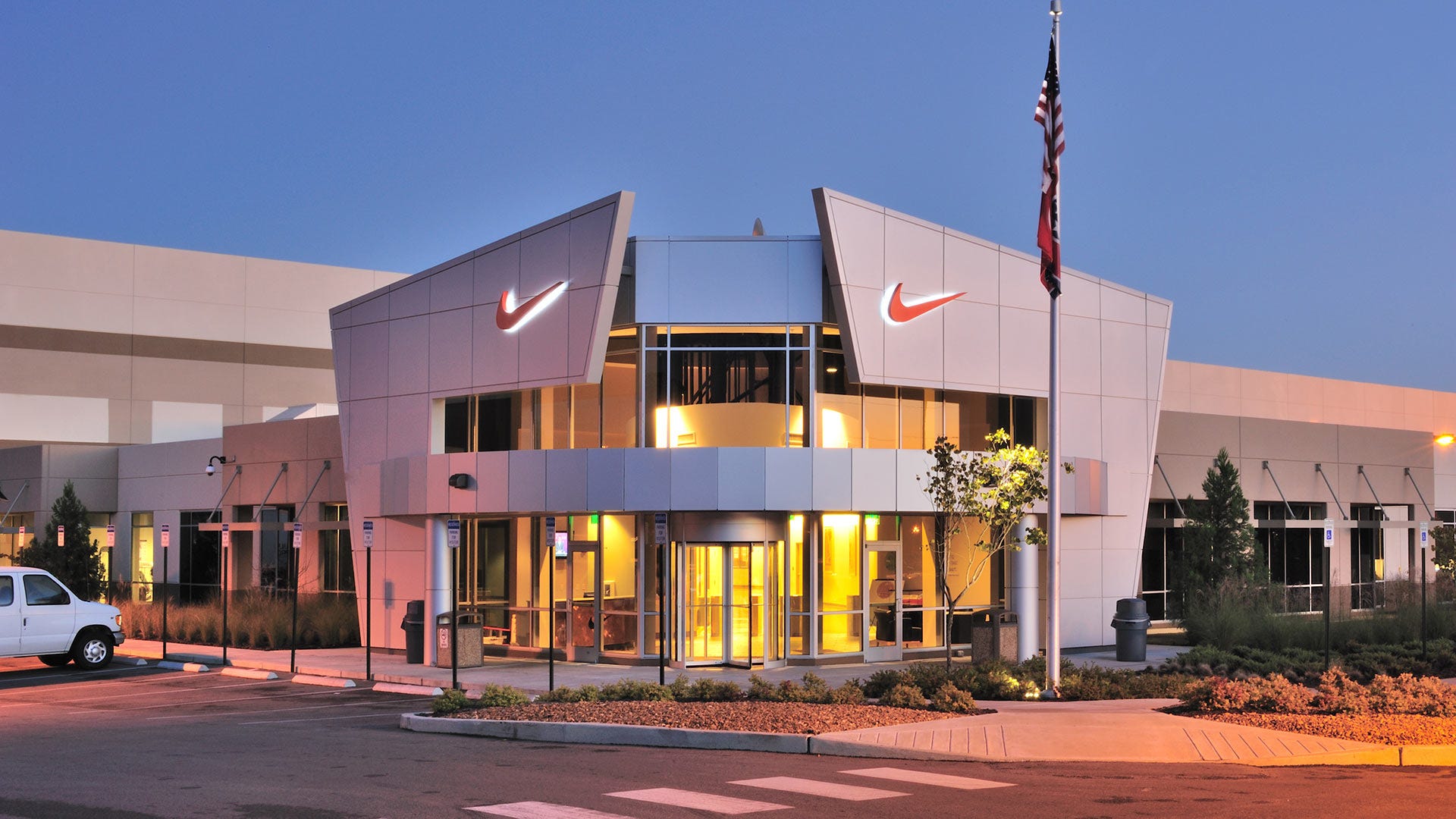
Nike’s CFO Matthew Friend said U.S. tariffs on Southeast Asian countries, where Nike manufactures most of its products, were expected to cost the company $1.5 billion. Add that to the restructuring costs, the China slowdown, and the years of promotions that trained customers to wait for discounts, and it starts to make sense why Nike reported a 32% drop in net income in its most recent quarterly results. That’s not a company that stumbled. That’s a company that ran full speed in one direction and is now sprinting the other way, and real people are caught in the middle every single time.
Here’s what I keep coming back to, though. Nike isn’t unique here. They’re just the biggest, most visible example of something happening across the entire industry... and honestly, across every industry. The same story is playing out at warehouses and corporate offices everywhere, and the part most people aren’t ready to talk about yet is that this is only going to accelerate.
