

I pulled a pair of original adidas adizero Crazy Lights out of storage a couple weeks ago. Been meaning to write about them, talk about what they meant, why they mattered. Then Steph Curry breaks out a Candace Parker PE... and suddenly everyone’s remembering these existed.
Perfect timing, really.
The adizero Crazy Light launched in 2011 with a promise that seemed almost too simple... be the lightest basketball shoe ever made. 9.8 ounces. That was it. That was the whole pitch.
No crazy design language. No wild colorways at launch forced into some packaged story. No Jordan-level marketing blitz. Just a basketball shoe that weighed less than a can of soup.
And you know what? It changed everything.
The Innovation Nobody Saw Coming
Sneaker culture gets under my skin sometimes... we’ve been conditioned to think innovation has to look innovative. That revolutionary products need to scream their importance from across the room. That if something matters, it better look like nothing we’ve ever seen before.
The Crazy Light looked like a basketball shoe. Because it was a basketball shoe. Just an impossibly light one.
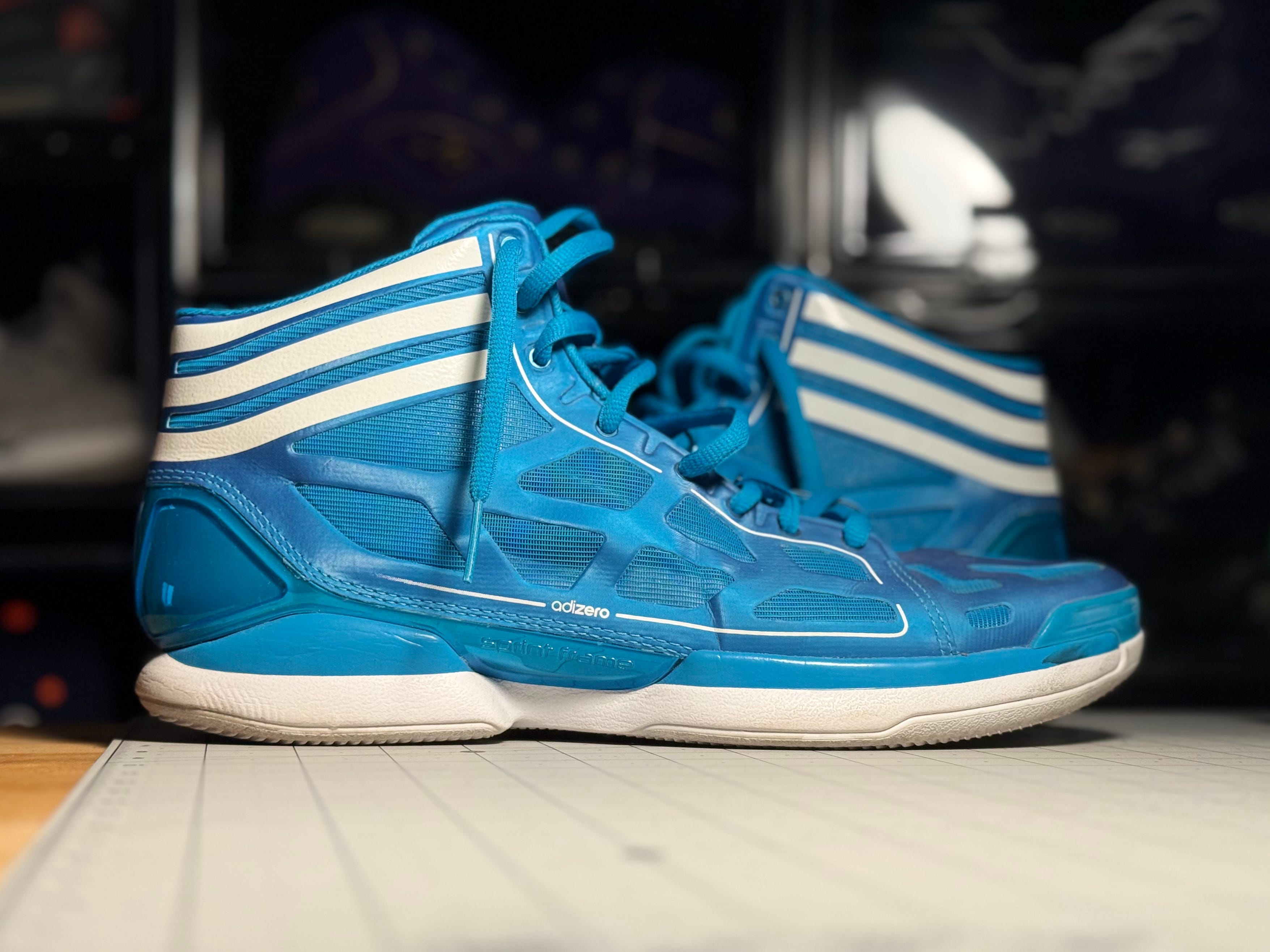
I have the Sharp Blue colorway from the press release still. I think that clean launch colorway really let the shoe speak for itself. Somewhere in storage, I’ve also got a pair of D-Rose PEs... need to dig those out. No need for wild graphics or unnecessary aesthetics when you’re making history by subtraction rather than addition.
Think about what Robbie Fuller and adidas did... they didn’t add some wild tech or invent a new foam or create a marketing moment. They just asked a different question. Not “what can we add?” but “what can we remove?”
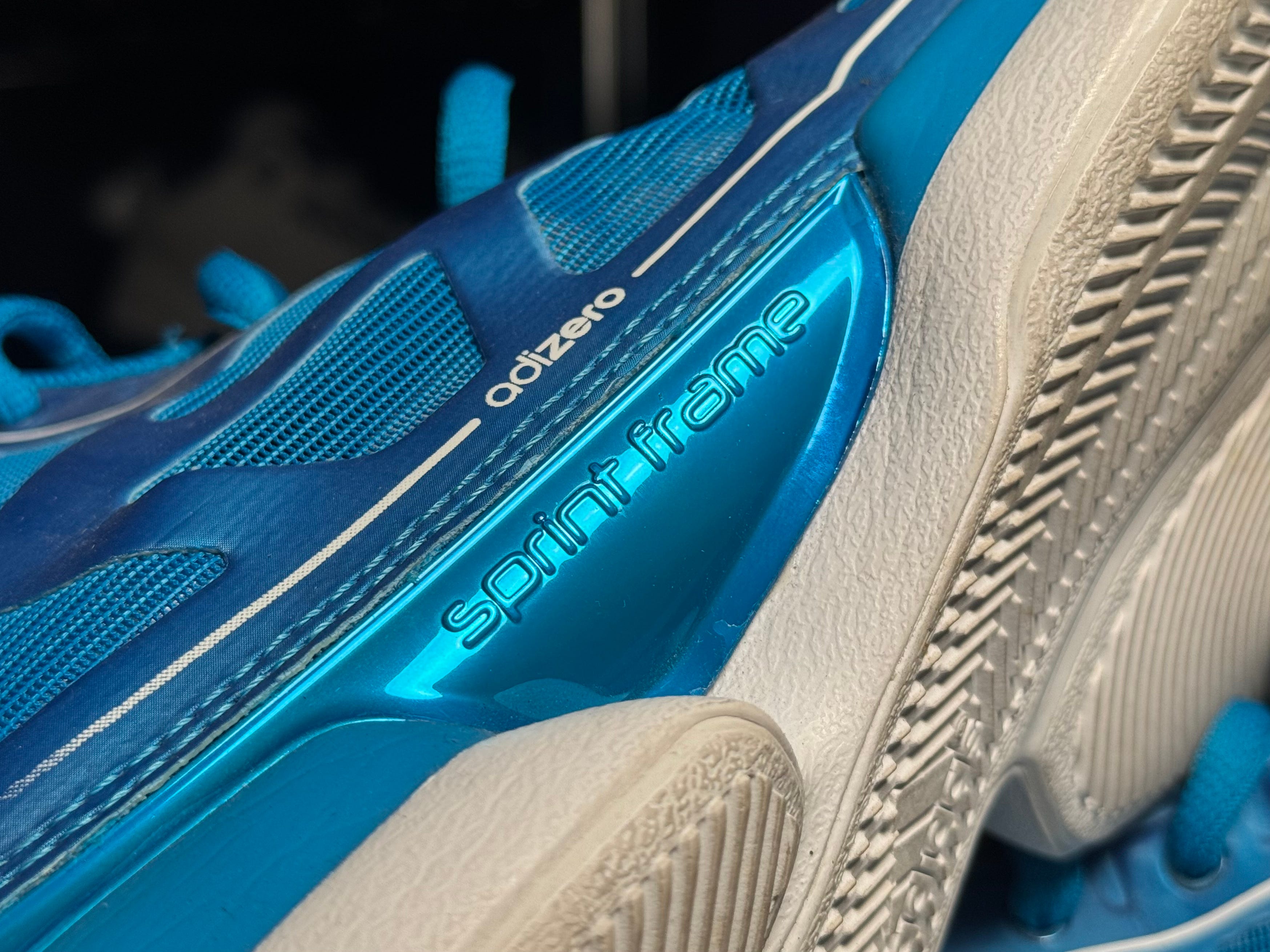
Sprint Frame construction. Synthetic mesh upper that you can literally see through. No excess anywhere. Every component existed only because it had to.
The result? A shoe that felt like you were wearing nothing, but performed like you were wearing everything.
What “Crazy” Actually Means
The Crazy Light is proof that “crazy” innovation doesn’t actually have to be crazy in design language or unnecessary aesthetics. Sometimes it can just be a bold step toward better performance like lightweight construction.
Think about the name for a second. Crazy Light. Not the adidas Revolution. Not the adidas Feather. Not some made-up word or athlete’s nickname.
Just... Crazy Light.
Because making a 9.8-ounce basketball shoe that actually worked was the crazy part. The innovation was in the execution, not the presentation.
We’ve gotten so used to brands wrapping performance innovation in visual noise. Add some wild colorways, throw in asymmetrical lacing, design a collar that looks like nothing else, slap on some meaningless graphics. Make it look innovative so people believe it is.
adidas went the opposite direction. They let the weight do the talking.
That takes confidence. That takes belief in what you’ve actually built. That takes understanding that sometimes the most radical thing you can do is just... solve the problem and get out of the way.
The Derrick Rose Era
To understand why the Crazy Light mattered, you have to understand what adidas was building in 2011. This was the Derrick Rose era. The youngest MVP in NBA history. Explosive. Fast. Unstoppable.
And adidas was obsessed with one idea... lighter meant faster. Faster meant better.
The D-Rose line embodied this philosophy. Every model pushed weight reduction while maintaining support. Rose was playing at a speed the league had never seen, and adidas wanted his shoes to feel like an extension of that speed, not a limitation of it.
The Crazy Light was the purest expression of that thinking. If Rose’s signature shoes were about balancing lightweight with his specific needs, the Crazy Light was about seeing just how light they could actually go.
I love all those early D-Rose models... the 1, the 1.5, the 2, the 2.5. Each one deserves its own deep dive. But that’s for another day. What matters is understanding that the Crazy Light didn’t exist in a vacuum. It was part of a brand-wide mission to make speed the defining characteristic of adidas basketball.
Rose made the philosophy famous. The Crazy Light made it extreme.
And the fact that Candace Parker had PEs of these? That tells you how seriously adidas took the entire roster. This wasn’t just about the men’s game. The lightest shoe in basketball worked for everyone who wanted to play faster.
The One Thing They Got Wrong
The Sprint system worked well for me. Sprint Frame, Sprint Web... all that structural innovation that made the shoe possible while keeping it stable. adidas nailed the lightweight construction, the lockdown, the responsiveness.
But the adiprene cushioning? That left me wanting more.
Don’t get me wrong... it wasn’t bad. It was functional. Court feel was excellent, which makes sense when you’re trying to keep weight down. But after a full game, my feet knew I’d been playing in a minimal setup.
And I don’t think I was the only one wishing Boost cushioning was a part of this era of basketball shoes.
Boost launched in 2013 with the Energy Boost running shoe. By 2014, it was in basketball with the Crazylight Boost. Suddenly, adidas had figured out how to make shoes light and cushioned. The holy grail.
In 2011 though? We were still in the adiprene (EVA) era. And while it served the mission of keeping weight down, it was the one compromise you felt every time you played.
Imagine if the original Crazy Light had launched with Boost. Would’ve been unstoppable. Instead, we got a glimpse of what was possible... and then had to wait a few years for them to perfect it.
