

There is a quote that has been living in my head since I first read it a couple of weeks ago.
Grace Ladoja, talking about why the Nike Air Max Plus was the shoe she chose for her historic collaboration with Nike, said this: “I saved up my bus fare to buy the shoe when I was young. I walked to school for 60 days to buy this shoe, so it feels really special to have it be the first thing I’ve worked on with Nike.”
Sixty days.
I’ve been in the sneaker business for a long time. I’ve heard a lot of origin stories, a lot of “I grew up loving sneakers” quotes from collaborators and brand partners. Most of them are true. Some of them are polished for the press release. But that one hits different, because it isn’t about hype or clout or a carefully managed brand moment. It’s about sacrifice. It’s about a kid who wanted something badly enough to give something up every single day for two months to get it.
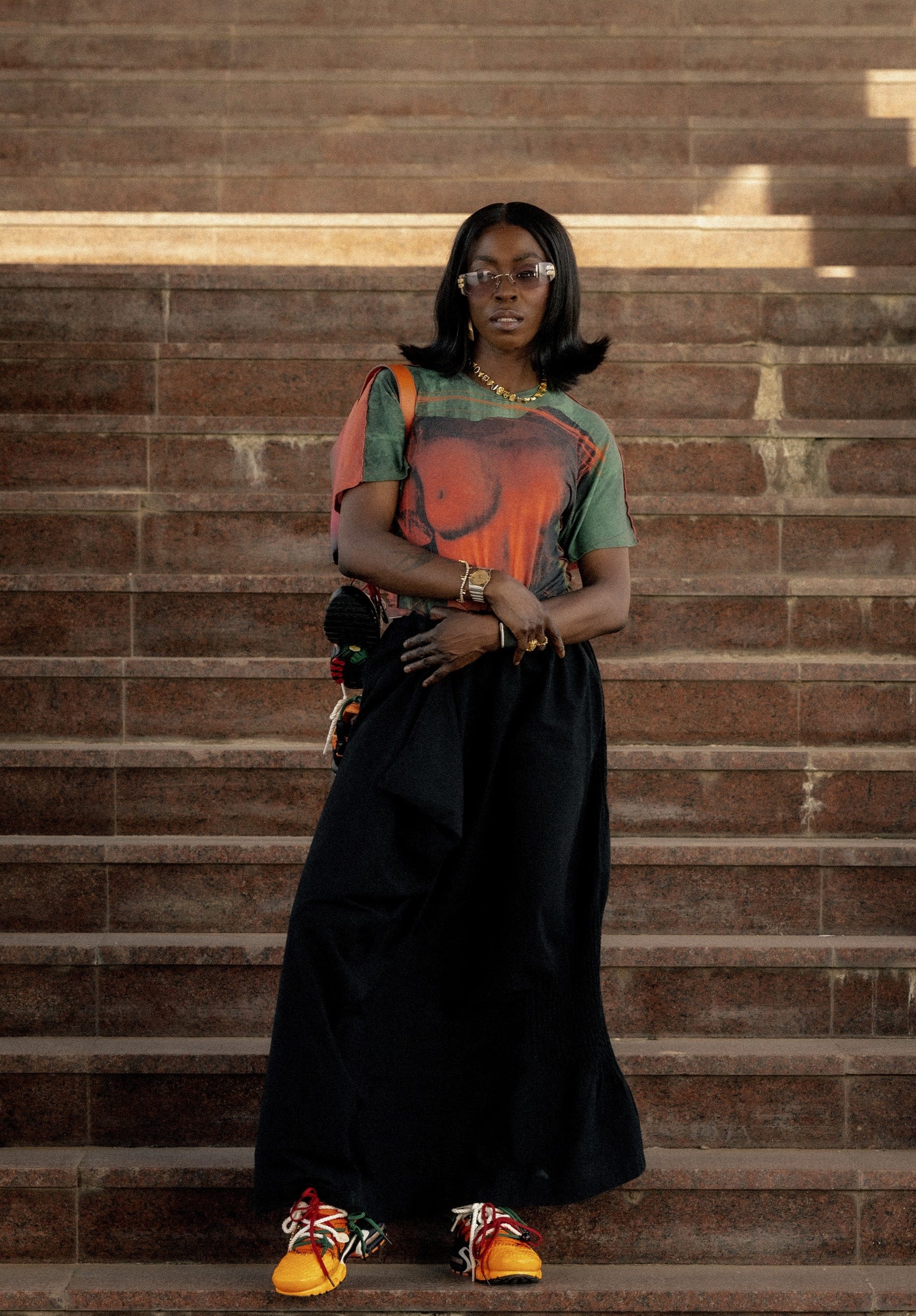
To me, that story tells you everything you need to know about Grace Ladoja... and why this collaboration is more significant than most people in sneaker culture are giving it credit for.
But to really understand why it matters, you have to go back further. A lot further.
In 1995, Nike released the Air Swoopes, the first women’s signature athletic shoe in history. Sheryl Swoopes had just led Texas Tech to the 1993 NCAA championship, was preparing for the 1996 Olympics in Atlanta, and was about to become one of the first three players to sign with the newly formed WNBA. Nike saw something in her that the industry hadn’t fully reckoned with yet... that women’s basketball had stars worth building around, and that those stars deserved shoes designed for them, not just scaled down versions of what the men were wearing.
The design team for the Air Swoopes was led by Marni Gerber, a female Nike designer who worked directly with Swoopes to figure out what a women’s performance basketball shoe actually needed. Proper ankle support. Lightweight build. A shoe that looked like it belonged on the court. What came out of that collaboration was more than a sneaker. It was a statement that women’s athletic footwear deserved to be taken seriously on its own terms.
Swoopes wasn’t alone for long. Lisa Leslie got her own Nike signature, the Total Air 9, in 1998, its quilted upper famously inspired by Chanel bags. Dawn Staley, who signed with Nike in 1995, had her Nike Zoom S5 released in 1999. Rebecca Lobo got one with Reebok. Cynthia Cooper with Nike. Chamique Holdsclaw. Diana Taurasi. Nine players in total across that era held signature shoes... a run that, looking back, represented one of the most significant investments the industry had ever made in women’s athletic footwear. Worth noting... the Sacramento Monarchs, my hometown team, won the only championship in franchise history that same year Taurasi got her first signature shoe. It would be over 15 years before Nike gave another woman her own model.
And then it largely stopped.
From Candace Parker’s adidas Ace line in 2010 through most of the next decade, women’s signature basketball shoes became a rarity rather than a standard. The culture moved on. The investment dried up. And for a long stretch, the message the industry was sending, intentionally or not, was that the moment had passed.
It hadn’t passed. It had just been waiting.
Dawn Staley, now the head coach at South Carolina and one of the most respected figures in the game, has spent the last several years bringing a level of attention to women’s college basketball that hasn’t existed since that late 90s golden era. The Gamecocks have become must-watch basketball, and Staley herself has become a cultural force who carries the history of that Swoopes era with her everywhere she goes. She was the one who called A’ja Wilson when Wilson’s Nike signature shoe was announced, right alongside Swoopes and Lisa Leslie, telling her she deserved it.
That call mattered because A’ja Wilson’s Nike A’One wasn’t just a signature shoe. It was proof that the industry had finally come back around. Wilson waited longer for that shoe than she should have. She said as much herself. “It did take a moment — probably longer than what I wanted, probably longer than what a lot of people wanted — but we’re here now.” The A’One sold out in under five minutes when it dropped in 2025. The A’Two releases May 2nd, 2026, at $145, with a design language deliberately rooted in the 1990s leather basketball aesthetic, a direct nod back to the era Swoopes and Leslie built.
Meanwhile, on the college side, something significant is happening under the Jordan Brand umbrella. JuJu Watkins, the USC star and Naismith Trophy winner, co-created the LeBron NXXT Gen by JuJu with LeBron James himself, becoming the first athlete to build a hoopshoe within LeBron’s platform. It drops this summer. And Azzi Fudd, taken No. 1 overall by the Dallas Wings in last week's WNBA draft, just signed with Jordan Brand, joining a female-fronted NIL roster that includes her teammate Sarah Strong, Kiki Rice, and others. Fudd said it plainly: “I hope that I continue to inspire young girls who dream of playing at the highest level.”
Within the Nike family alone, women collaborators like Aleali May and Teyana Taylor have been building their own lanes with Jordan Brand for years. May, who is Black and Filipino, became the first woman to design a unisex Air Jordan when her “Satin Shadow” AJ1 dropped in 2017, and she hasn’t slowed down since. Taylor just dropped her Air Jordan 3 “Concrete Rose” in March 2026, the follow-up to her “Rose From Harlem” AJ1 in 2023. Both women brought their own stories, their own heritage, and their own creative vision to one of the most iconic brands in sneaker history.
Which is exactly the point. The Nike family is in the middle of something that feels a lot like the late 90s... a genuine investment in women’s voices at every level of the product, from the court to the collaboration. And all of those stories, the signatures, the collabs, the NIL deals, are important. But Grace Ladoja dropping her Air Max Plus in Lagos feels like something different. Something that goes beyond a release that comes and goes with the news cycle.
To me, all of this together signals something the industry has been slow to say out loud. As I told Marie Claire recently, the investment in women's footwear isn't a trend. It isn’t a response to the Caitlin Clark news cycle. It’s a correction of a long imbalance, driven by athletes and coaches and cultural figures who never stopped pushing even when the industry stopped paying attention.
Which brings me back to Grace Ladoja. And why her story belongs in this conversation just as much as any of the above…
