

This one’s long. I tried to make it shorter, but I kept thinking about my equity statement from Farfetch showing $0.00. About watching Stadium Goods go from a high-end retail experience to selling on TikTok and Walmart. About every brand New Guards Group acquired, losing whatever made them matter in the first place. Bloomberg’s report that Anta is exploring a bid for PUMA brought all of it back. So yeah, this got long. If you work in this industry, or you actually care about what happens to brands beyond just buying shoes... it’s worth the read.
When Bloomberg reported that China’s Anta Sports is exploring a bid for PUMA, my first reaction wasn’t surprise. It was resignation.
Because I’ve lived this story. Personally.
In 2022, I left consulting to join Stadium Goods full-time as they launched their consignment communications and Chicago flagship location. Farfetch had already acquired them, and they convinced me with equity. A chance to build something. A stake in the company’s future. I believed in what we were doing... curating sneaker culture, connecting collectors, building something that mattered beyond just moving product. If you ever walked into Stadium Goods in NYC, you know how big a deal this brand was to the community.
Then Farfetch... who had previously acquired New Guards Group (which itself had acquired Palm Angels, Off-White, Heron Preston, Ambush, Opening Ceremony)... went bankrupt and got bought by Korean e-commerce giant Coupang in a fire sale.
My equity? Gone. Everyone’s equity? Worthless.
And all those brands New Guards acquired? They don’t matter anymore like they once did. Off-White without Virgil is a logo licensing operation. Palm Angels is in outlet stores. Heron Preston bought his brand back, thank god, but the damage was done. Opening Ceremony closed its doors entirely.
Stadium Goods is still in business, technically. But they’re no longer the high-end retail experience they once were. Now they’re selling on TikTok and Walmart. Same name, completely different business.
That’s what happens when brands become balance sheet entries.
So when I see Anta circling PUMA, I don’t see opportunity. I see the same pattern playing out again. Bloomberg mentioned that ASICS and Li-Ning were also in the conversation, but Anta appears to be the only real player. Different country, same playbook. Whether it’s American private equity, Chinese conglomerates, or Korean tech companies... the goal is always the same. Extract every ounce of profit like wringing out a soaked towel, and leave the brand in shreds, never to build on its existing legacy.
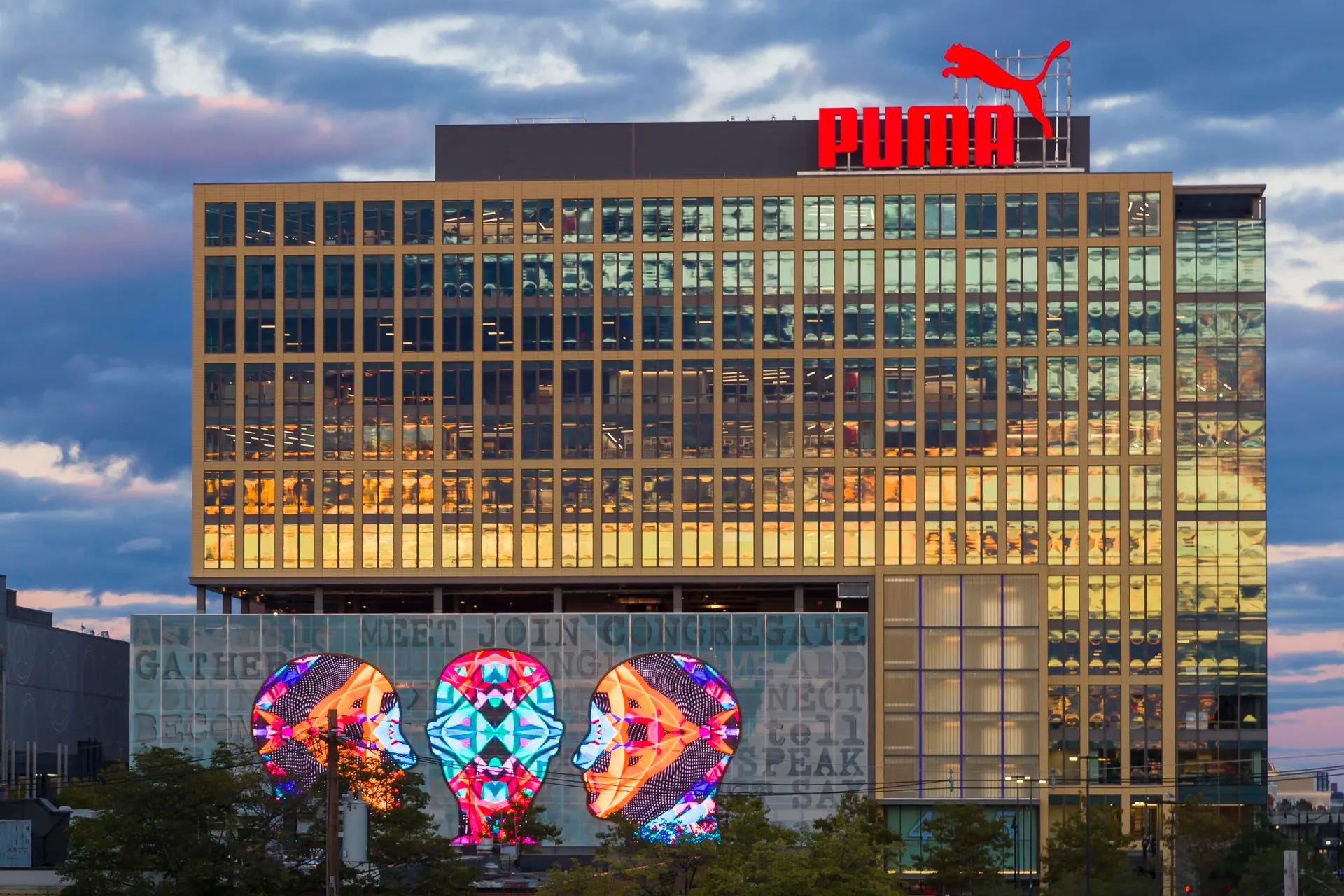
PUMA’s in trouble. Four years ago, they opened a massive North American headquarters near Boston. Now? Their shares are down over 60% this year. They just announced 900 job cuts. Their new CEO rolled out a “new strategy” a couple weeks ago that the market immediately rejected. Revenue keeps declining. The Pinault family shareholders who control the company are sitting on stock that traded at $47 a year ago and is worth $16 today.
That desperation creates opportunity. And Anta sees it.
The Anta Empire
Let me be clear about something... Anta isn’t some upstart. They’re massive. By revenue, only Nike and adidas are bigger. Its main subsidiary is Finnish sport retailer Amer Sports, which itself manages 25 apparel brands including Arc’teryx, Salomon, and Wilson. They own Fila (in China). They own Descente. That’s a portfolio that would make any conglomerate jealous.
Their strategy has been consistent: buy Western heritage brands, leverage manufacturing expertise, sell globally, profit.
And honestly? Their footwear is underrated in the United States. The tech is genuinely impressive. Americans just can’t get over their own narrative about Chinese-made goods. I’ve worn Anta basketball shoes. The cushioning tech competes with anything Nike or adidas is doing. But try telling that to someone who still thinks “Made in China” automatically means inferior.
The irony, of course, is that the shoes on their feet are probably also made in China.
Sometimes Anta’s acquisition strategy works. Arc’teryx has actually thrived under their ownership. The brand’s maintained its premium positioning, expanded thoughtfully, and kept its outdoor credibility. That’s the best-case scenario.
But for every Arc’teryx, there are a dozen brands that get absorbed into the machine and lose what made them matter in the first place.
PUMA is particularly vulnerable because they’re already struggling with identity. They’re not Nike. They’re not adidas. They’re not New Balance carving out a lane through quality and heritage. They’re... PUMA. A brand with incredible history that’s spent the last decade trying to be everything to everyone and succeeding at being nothing to anyone.
The Suede is iconic. The Clyde is legendary. Maradona wore PUMAs. Pelé wore PUMAs. Shoes like the R698 and Disc Blaze rival any shoe from the ‘90s. They still have their brief glimpses of greatness… the motorsport stuff with Lewis Hamilton and F1, Rihanna, and ASAP Rocky, all have had shining moments. But when was the last time you heard someone say, “I need those new PUMAs”?
Here’s what happens when conglomerates buy brands:
Year 1-2: The Honeymoon. New ownership comes in talking about “respecting the heritage” and “investing in the brand” and “long-term vision.” They keep the leadership team. They promise nothing will change. Maybe they even increase marketing spend to show commitment. (I came into Stadium Goods at the end of this phase to build their communications strategy with consignors.)
Year 3-4: The Optimization. Consultants arrive. “Operational efficiencies” get identified. Manufacturing gets centralized. The design team in Germany starts getting overruled by supply chain teams. “Heritage” becomes “heritage-inspired” becomes “inspired by our heritage” becomes something that looks vaguely like what the brand used to make but costs 40% less to produce.
Year 5+: The Extraction. The brand is now a vehicle for revenue, not a cultural entity. Product cycles accelerate. Quality declines. The designers who understood what made PUMA special either quit or got laid off in Year 3. What’s left is a logo on products that could be made by anyone, sold to people who don’t really care.
I watched this happen at Stadium Goods. I watched it happen with every brand New Guards acquired. I’m watching it happen right now across the industry.
